
BBS2025 Individual Assignment
Learning Objectives
a. Examine the business scenarios using the four elements of Computational Thinking.
b. Apply business process mapping to identify the current state of the process.
c. Automate business processes that address the identified problems in the current state of the process.
Requirements
a. This is an individual assignment that carries a maximum of 50 marks and constitutes 25% of the overall assessment for this subject. The breakdown of the 50 marks is provided in Annex B (Marking Rubrics).
b. Students are expected to work alone when preparing the assignment.
c. Students will take on the role of a Business Analyst and complete all four core deliverables outlined below:
i. Explain the process of applying the four elements of Computational Thinking to examine the business operations in the case study (Annex A), share findings such as patterns, essential information, and process flow.
ii. Develop an As-Is business process map to represent the current state of the identified business process, accurately capturing process steps, decision points, and interactions using Microsoft Visio.
iii. Identify an impediment in the business process and explain how it hinders the process in the long term, analysing its impact on overall business operations.
iv. Improve the current state through Power Automate by designing and configuring the automation workflow correctly, demonstrating its effect on the process.
Submission
a. The assignment is to be submitted in LMS by 13 July 2026, Monday 9:00am.
i. Submission through other means (e.g. physical, email) will not be accepted.
ii. You are required to submit the following:
- 1 File: Declaration of Originality • 1 File: Flowchart (As-Is) • 1 File: Screenshot of your Power Automate flow and URL
b. The assignment MUST follow the requirements below:
Flowchart (As-Is)
i. Export your flowchart as PDF.
ii. Rename your flowchart in the following naming format:
Name_Admission Number_IA.pdf (e.g. John Tan_2601234A_IA.pdf) iii. Upload your flowchart in LMS.
Power Automate Flow
i. Grant access to your Power Automate process flow for your tutor. Access not granted to your tutor by the submission deadline will NOT be graded.
ii. Submit the URL in the comments field of the LMS.
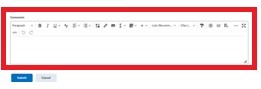
iii. You are NOT allowed to access and/or modify your Power Automate process after submission. Otherwise, a penalty of 20% deduction of the overall marks will be applied to your submission.
c. Demonstration
i. The demonstration will take place during tutorial hours in the submission week (week of 13 July 2026).
ii. The demonstration must be presented from your laptop.
iii. Each student will be given 6.5 minutes (including 1.5 minutes for Q&A) to present the four core tasks (outlined in 2c – Requirements).
iv. You are required to log in to LMS and access the Individual Assignment submission page before entering the room.
Submission Policy
a. Any plagiarism of work would result in zero marks for this project.
b. Assignments submitted after the deadline will be penalised by 20% of the total marks. Any assignment submitted more than 3 days after the deadline will be given “0” marks.
Guidelines
a. Students are expected to do additional research and reading.
b. In this assignment, you may use generative artificial intelligence (GenAI) tools for research purposes. All use of generative AI must be appropriately acknowledged.
A Declaration of Originality form must be submitted.
c. Students should not delete their flow from Power Automate till 1 October 2026.
Annex A
Meeting Minutes – Singa Healthcare
Date: 20 April 2026 (Monday)
Time: 10:00 am – 11:30am Attendees:
- Sarah Lim – Clinic Director / Senior Physician
- Tan Wei Ming – Operations Manager
- Jasmine Chua – Reception Supervisor
- Ahmad Faris – Administrative Staff
- Lim Mei Ling – Patient Services Coordinator
- Ravi Kumar – General Practitioner
- Grace Ong – Quality Assurance Officer
Location: Singa Healthcare – Meeting Room 10
1. Sarah Lim opened the meeting by welcoming everyone and highlighting the focus on day-to-day operational patterns.
2. Jasmine Chua shared the morning routine for handling appointment requests. She noted that calls start coming in from 8:00 AM, with multiple patients trying to secure slots. Reception staff spend time checking appointment availability manually and managing ongoing calls. Mr. Ahmad Faris added that while some patients sometimes have to wait or give up after repeated attempts, others are able to secure last-minute same-day appointments. The team acknowledged that the extended operating hours and flexible same-day slots have helped some patients get timely consultations, even during busy periods.
3. Ms. Grace Ong discussed in-clinic operations, noting that consultation rooms are efficiently used and staff generally manage patient flow effectively. She mentioned the digital queue display, which has helped reduce waiting-time complaints for on-site patients. At the same time, the team noted that patient feedback arrives through multiple channels (emails, phone calls, paper forms, and direct staff interactions). Some feedback is addressed quickly, but other messages take longer to reach the appropriate department. For example, a billing concern from earlier in the week circulated among staff before reaching the accounts team, and a medication query submitted via email went unnoticed for a couple of days. The team also noted that a centralised feedback email account was recently introduced, which some staff believe has improved visibility of patient messages.
4. Throughout the discussion, the team reflected on how these operational patterns intersect with patient experience and staff workload. Dr. Lim observed that overall, the clinic continues to provide high-quality medical care and that many patients report satisfaction with the timeliness and professionalism of consultations. At the same time, documenting current routines and understanding how different steps interact was seen as valuable for identifying opportunities to streamline operations further.
5. The meeting concluded with Dr. Lim thanking everyone for sharing their observations and noting that workflow documentation would provide a useful reference for future analysis and potential efficiency improvements.
Short on Time to Complete Your BBS2025 Individual Assignment?
Native Singapore Writers Team
- 100% Plagiarism-Free Essay
- Highest Satisfaction Rate
- Free Revision
- On-Time Delivery