
| University | James Cook University (JCU) |
| Subject | BX2091 Tourism & Leisure Management |
BX2091 ASSESSMENT TASK 3
Research Workbook (50%)
Research and answer ALL questions
Note:
- To evidence your research, in text citation and references (APA style) are required. References should be placed at the end of each question.
- Insert your answers in the space provided for each question.
- References are not included in the word count of each question.
Struggling with Your BX2091 Research Workbook?
Native Singapore Writers Team
- 100% Plagiarism-Free Essay
- Highest Satisfaction Rate
- Free Revision
- On-Time Delivery
QUESTIONS
Q1. The Tourism System (15%)
1.1 Describe the extent to which Singapore functions simultaneously as an origin region, transit region and destination region. (5%, 100 words). (SLO1, SLO2 &CLO1)
1.2 Discuss the potential synergies and conflicts that emerge from each of the three
region combinations (e.g. origin/transit, origin/destination, transit/destination). (5%, 100 words). (SLO2, SLO3 & CLO3)
1.3 Define your most recent experience as a tourist, in terms of which of the four
categories in Figure 1 below it falls under, and also which purpose or purposes as
discussed in topic of purposive component of the tourist (e.g. leisure, VFR, business, sport, spiritual & health, education, others). (5%, 100 words). (SLO1 & CLO1)
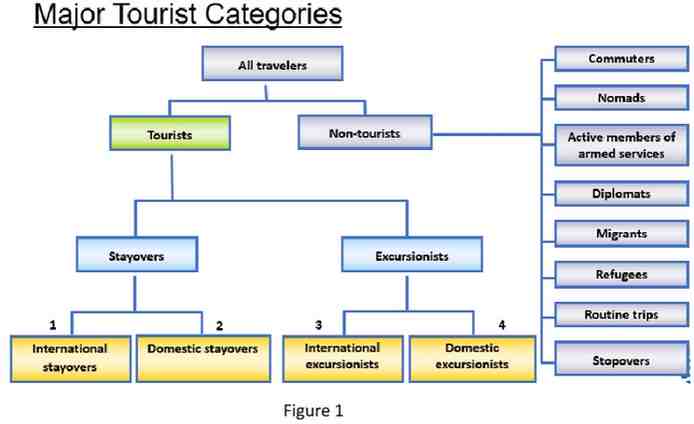 Major Tourist Categories
Q2. Tourism Demand (20%)
2.1 Rank the following ten destination countries beginning with the one that you would most like to visit for a one-month vacation, and ending with the one that
you would be least interested in visiting for a one-month vacation. (3%). (SLO2 & CLO1).
Zimbabwe Fiji Mexico China United States France Dubai India United Kingdom Russia
2.2 Indicate the reasons for your rankings, referring in each case to each of the pull
factors discussed in class. (6%, 150 words). (SLO2 & CLO3)
2.3 Figures 2 and 3 below show the top tourist arrivals to Singapore in 2014 and 2024 respectively. Describe the differences between the two years, listing the factors that could possibly explain the differences. (6%, 150 words). (SLO1, SLO2 & CLO6)
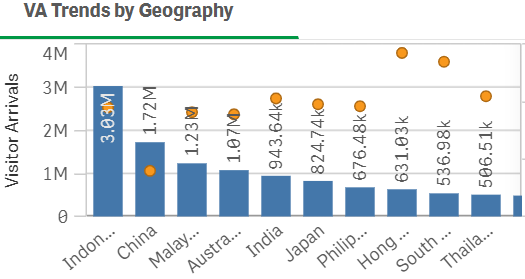
Figure 2 (2014 visitor arrivals to Singapore)
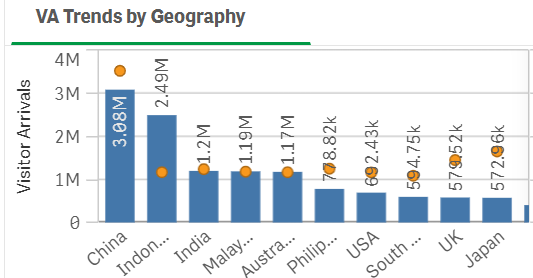
Figure 3 (2024 visitor arrivals to Singapore)
2.4 Predict what the pattern might look like in 2030. (5%,100 words). (SLO4 &
CLO6)
Q3. Tourism and Leisure Sustainability (20%)
3.1 Speculate on the likely positive socio-cultural, economic and environmental impacts associated with sex tourism (for example, in Bangkok’s red-light district).
(10%, 200 words). (SLO2, SLO3, CLO1 & CLO2)
3.2 Consider the likely negative socio-cultural, economic and environmental impacts
associated with volunteer tourism (for example, a scenario involving a volunteer organization with a humanitarian focus). (10%, 200 words). (SLO3 & CLO6)
Q4. Tourism and Leisure Marketing (25%)
4.1 Conduct a SWOT analysis of a particular destination. Each of the four destinations should be located adjacent to one another either at the international scale (e.g. Singapore, Malaysia, Indonesia and Thailand) or at the subnational scale (e.g. Melaka, Kuala Lumpur, Genting Highlands, Kuantan). (14%, 250 words). (SLO2, SLO4 & CLO3)
4.2 Show how the other three destinations fit into the SWOT analysis of each destination (6%, 150 words). (SLO2, SLO4 & CLO3)
4.3 Indicate ways in which the competition-related threats of these other destinations can be converted into opportunities. (5%, 100 words). (SLO2, SLO4 & CLO6)
Q5. Tourism Demand (20%)
5.1 Select a mature destination. Identify the measures taken by the destination managers and communities to rejuvenate the destination. (10%, 200 words). (SLO2, SLO4 &
CLO3)
5.2 Show how these measures are innovative with respect to, for example, organization, collaboration, technology, product development, marketing and/or management. (10%,200 words). (SLO2 &CLO1)
END
Need Tourism & Leisure Management Support?
This assignment question is originally published by SingaporeAssignmentHelp.com.
If this BX2091 Research Workbook feels overwhelming—whether due to research depth, APA referencing, or interpreting tourism models—getting expert support can save you time and stress. Our team crafts fully human-written and plagiarism-free solutions aligned with Singapore universities’ academic standards. For reliable guidance, use our Singapore Assignment Help service, or get specialised assistance through our Tourism Assignment Help support. Whenever deadlines get tight, our Singapore Assignment Expert Helper can help you complete your JCU assessments with clarity and confidence

Looking for Plagiarism free Answers for your college/ university Assignments.
- MKTG101 Marketing Coursework Brief 2026 | Singapore Management University
- NCO102 Effective Writing Tutor-Marked Assignment 1, 2026 | SUSS
- SC1101E Making Sense of Society Written Assignment 1 Brief 2026 | NUS
- BUSM2653 People Analytics Assesment 1 Insightful Analytics Report 2026 | SIM
- MLA604 Maritime Operations Assessment Brief 2026 | MLA College
- ICT226 Enterprise Systems and Integrated Business Process End-of-Course Assessment 2026 |
- OMGT2229 Strategic Supply Chain Assignment 3, 2026 | RMIT University
- NCO103 Listen and Be Heard: Effective Communication through Storytelling TMA 02, 2026 | SUSS
- PSY259 Personality and Individual Differences End-of-Course Assessment 2026 | SUSS
- ANL203 Analytics for Decision-Making End-of-Course Assessment 2026 | SUSS